
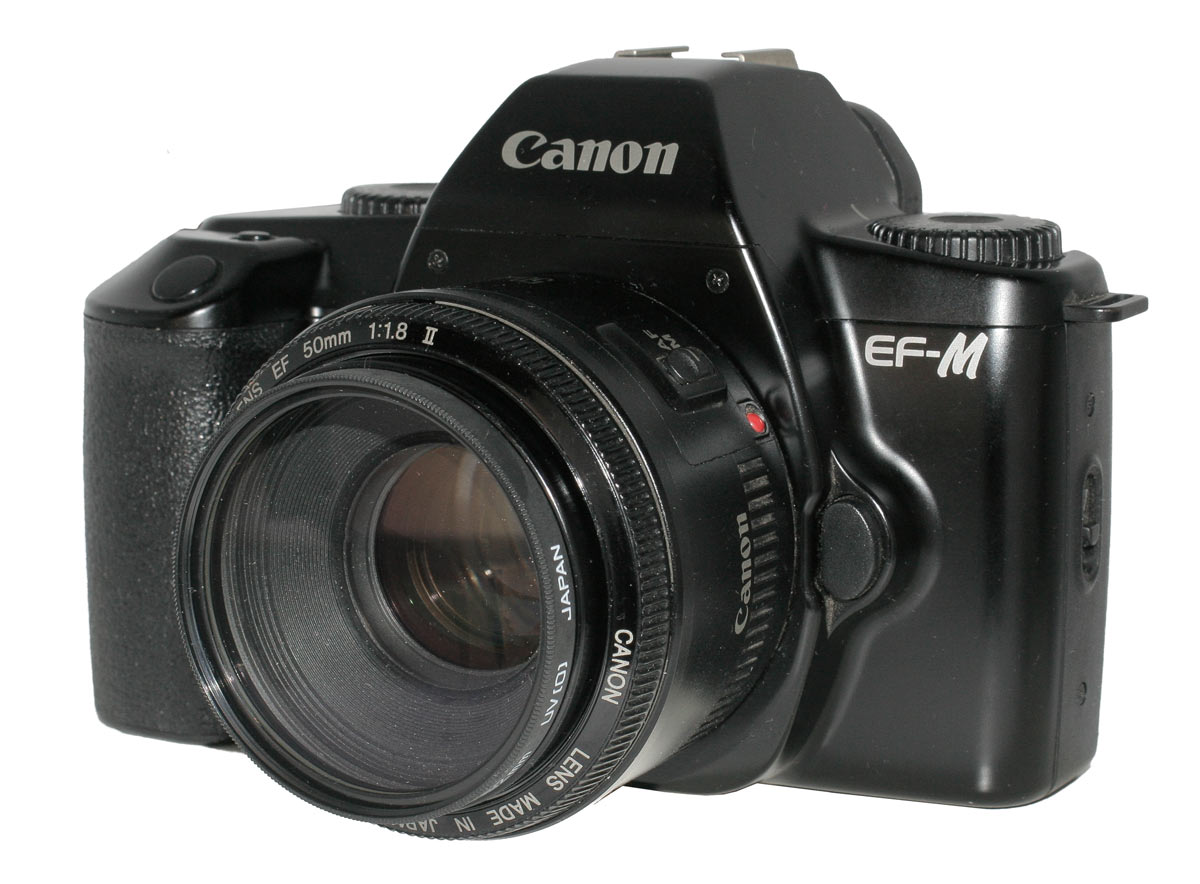
This is my EOS EF-M (Ser. No. 1657052). This camera is actually a simplified EOS Rebel which came out in 1990, a year before the EF-M.
Canon EF-M
And now for Something Completely Different
I was browsing offerings on E-bay the other day, as I often do, and came across a box of various cameras: no assurances as to condition, no detailed photos, thrown together, mostly junk. In the picture I could make out a Canon SLR and on the front the model appeared to be EF-M. I had never heard of such a camera. So onto the internet I went.
There were only one or two references to the EF-M camera and they said that this model took EF lenses. At first the
Canon Museum gave me nothing. There was no such EOS camera. I finally found it under Film Cameras/Other but the information was pretty thin. Apparently the camera was quite scarce. So I bought the box.
When I got my camera, the one I describe here, I found it was in beautiful condition and the bonus was that it was fully functional. And it had on it an EF 50mm f/1.8 II lens. And in the box was an FL 50mm f/1.8 so I was real happy.
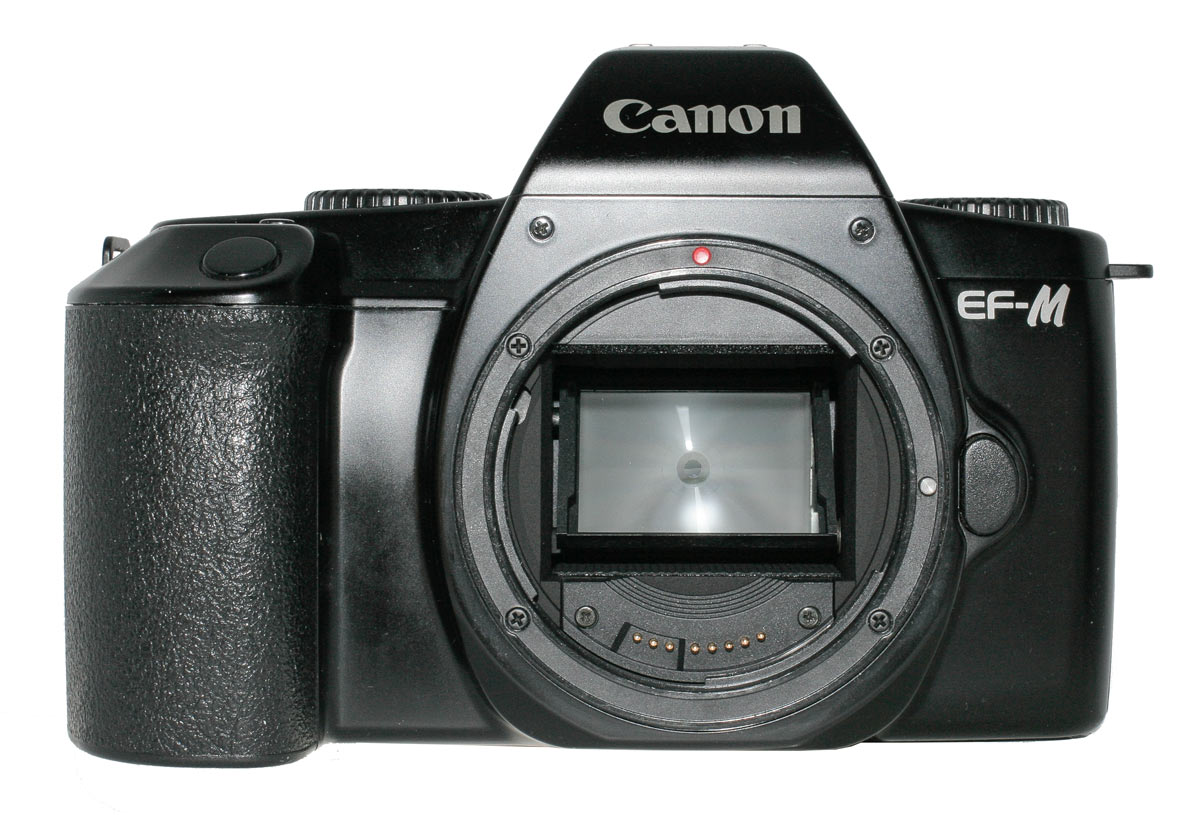
The EF-M was introduced in September of 1991, a year after the first EOS Rebel. It appears to be somewhat scarce and so it appears not many were made.
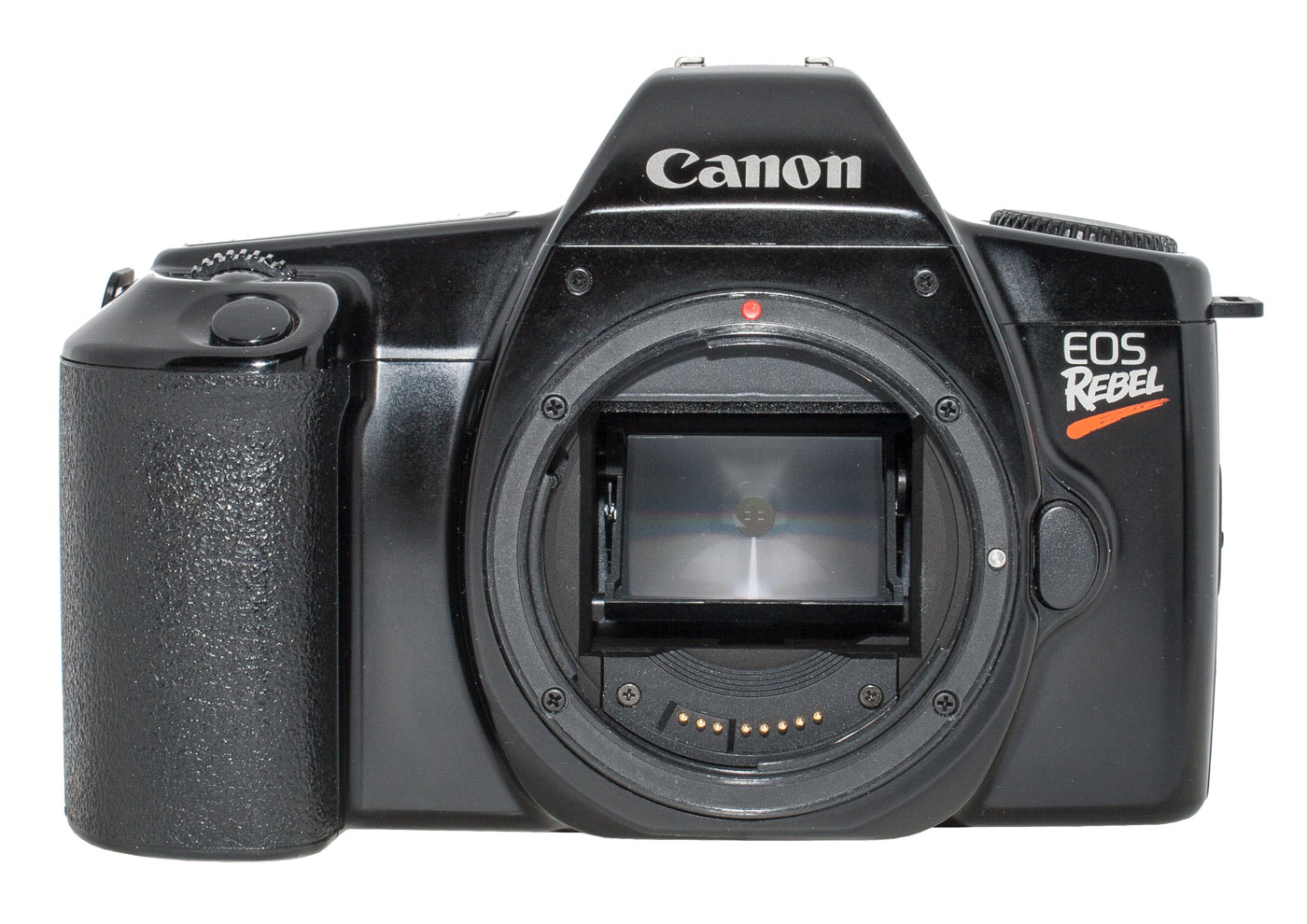
The first of the EOS Rebels was released in October of 1990 and would appear to be the camera the EF-M is based on. As a result, most accessories for the one fit the other.
Here is what I learned from all the sources I came across. The EF-M was introduced into the foreign (non-Japanese) market in September of 1991 but never in Japan. It was somewhat unique in that it had an EF lens mount but it was strictly a manual focus camera. Canon never called it an EOS camera because it lacked this essential component of the EOS system.
There is reference to it being basically an EOS Rebel (EOS 1000) without auto focus, built in flash or LCD on the top deck. The viewfinder is unique for an EOS camera in that it has a split image ground glass surrounded by a circle of microprisms. This makes manual focus much easier.
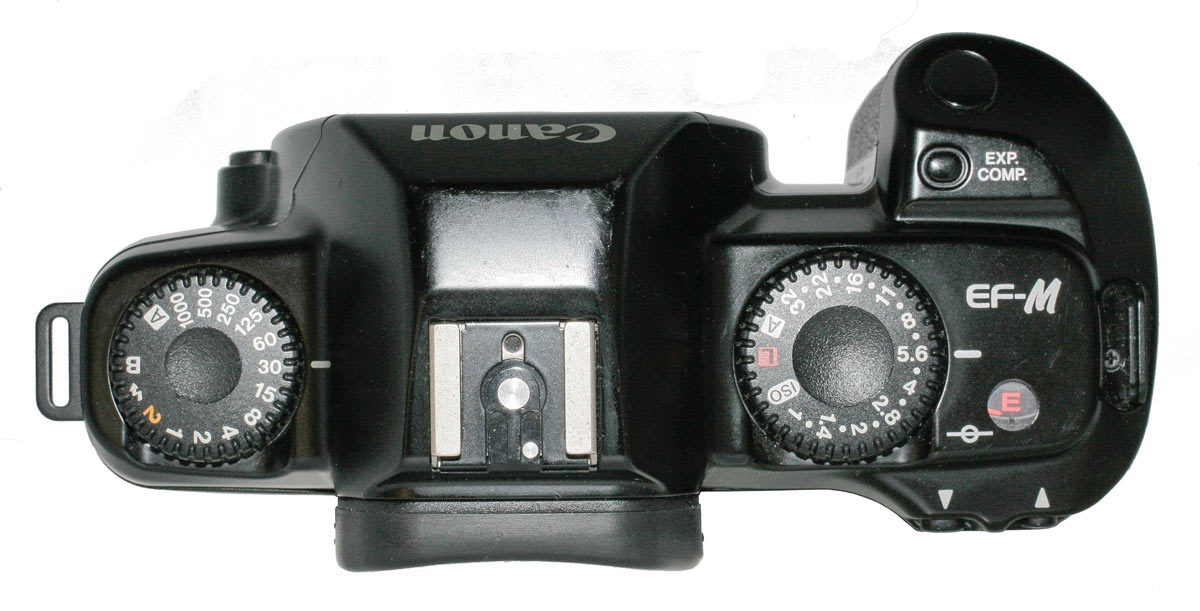
The most obvious difference between the EF-M and the EOS Rebel, besides the manual focus, is the lack of an LCD screen on the top deck. This is obviously a “manual” camera in every respect.
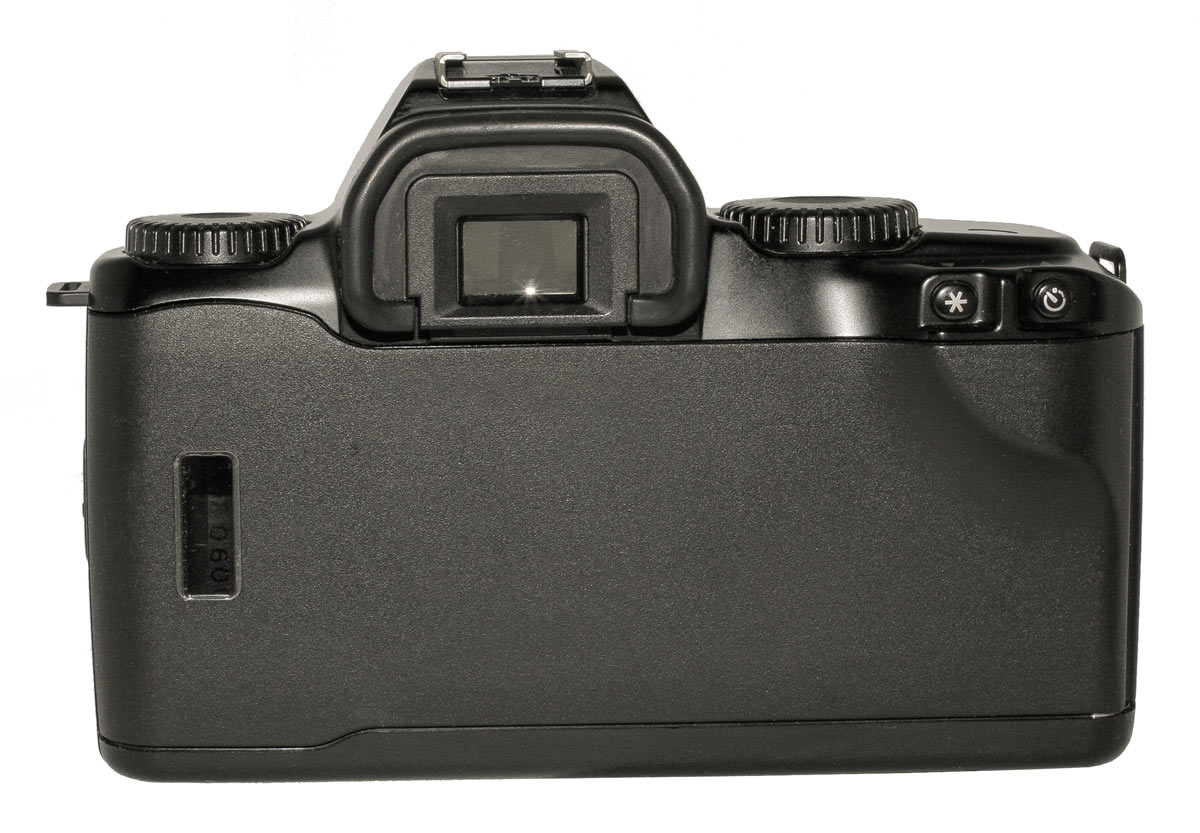
The back of the camera is very plain. The window on the left allows the user to see into the camera to determine if there is film in it and what it is. The dial on the top right side is in place of an LCD screen.
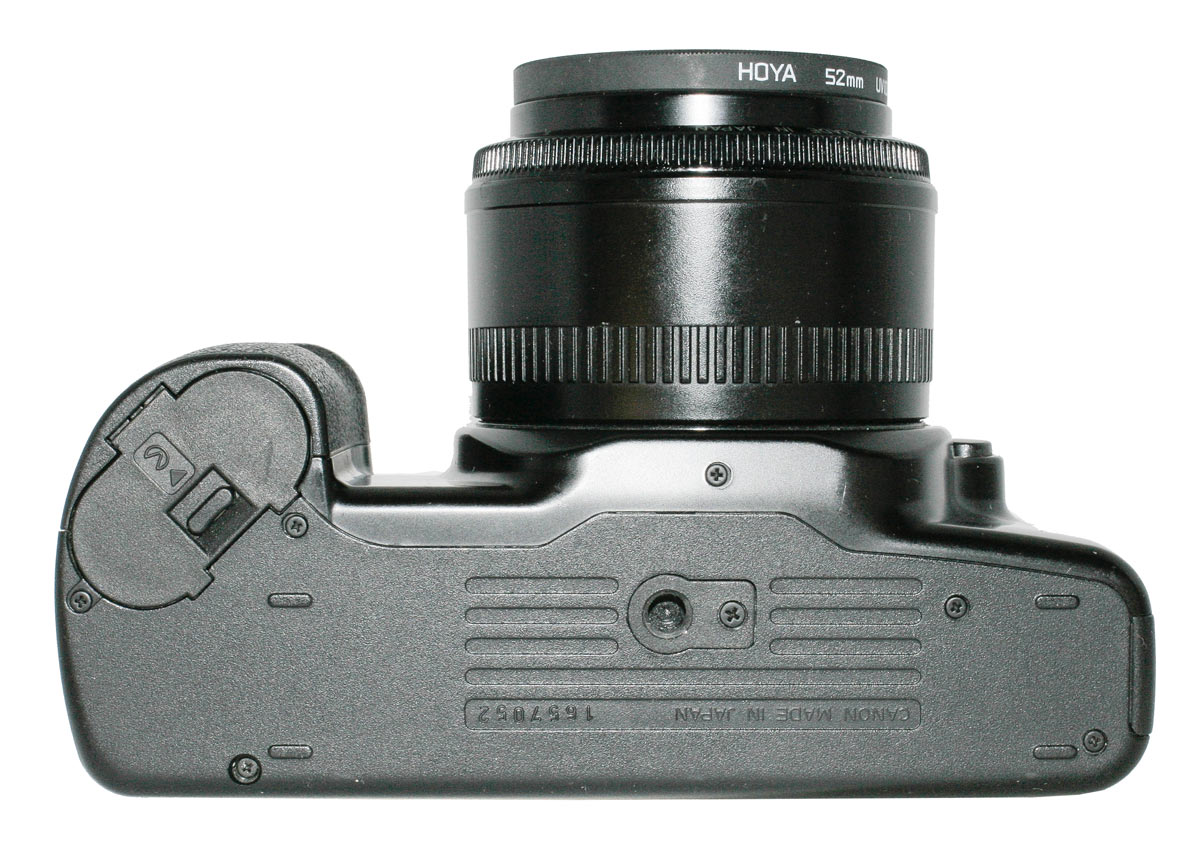
The bottom is identical to the EOS Rebel in every respect. On the left end is the battery compartment door for one 2CR5 6 volt battery.
The camera normally shipped with an EOS 50mm f/1.8 lens such as the one I received. It is also shown in the user manual with an EOS 35-80mm zoom which was a popular kit lens at the time on other cameras. This camera can accept any EOS lens but it is a good practice to set the lens to Manual Focus. Some EOS lenses do not react well to being focused by hand when in Auto mode.
So what about the camera itself? If you don’t like light plastic cameras you will not like this one. But I do like it. It has a good feel and some neat features. It is super simple to use. On top of the camera are two large dials. The one on the left is for shutter speed. On the right is the dial for aperture setting. If both dials are set to “A” the camera is totally automatic (except for focusing). If you actually set the shutter speed, then it is in Shutter Priority Mode. Leave the Shutter Dial on “A” and set the aperture and
the camera is in Aperture Priority Mode. If you set both, then the camera is fully manual. It is that simple and really neat! For all the details look at the User Manual.
There is no built in flash but it has a hot shoe and the camera uses a dedicated Speedlite 200M. In fact, there are many Canon flash units that would work well with this camera. You may have to get comfortable with Flash Unit Guide Numbers but then that is the fun of this old equipment.
Apparently not many were sold and so it is somewhat rare. I have seen prices from $50 to $300 USD (asking prices) and I know the price I paid was at the low end of this range.
I like this camera and intend to take it out and use it. But that will be a project for this Spring.
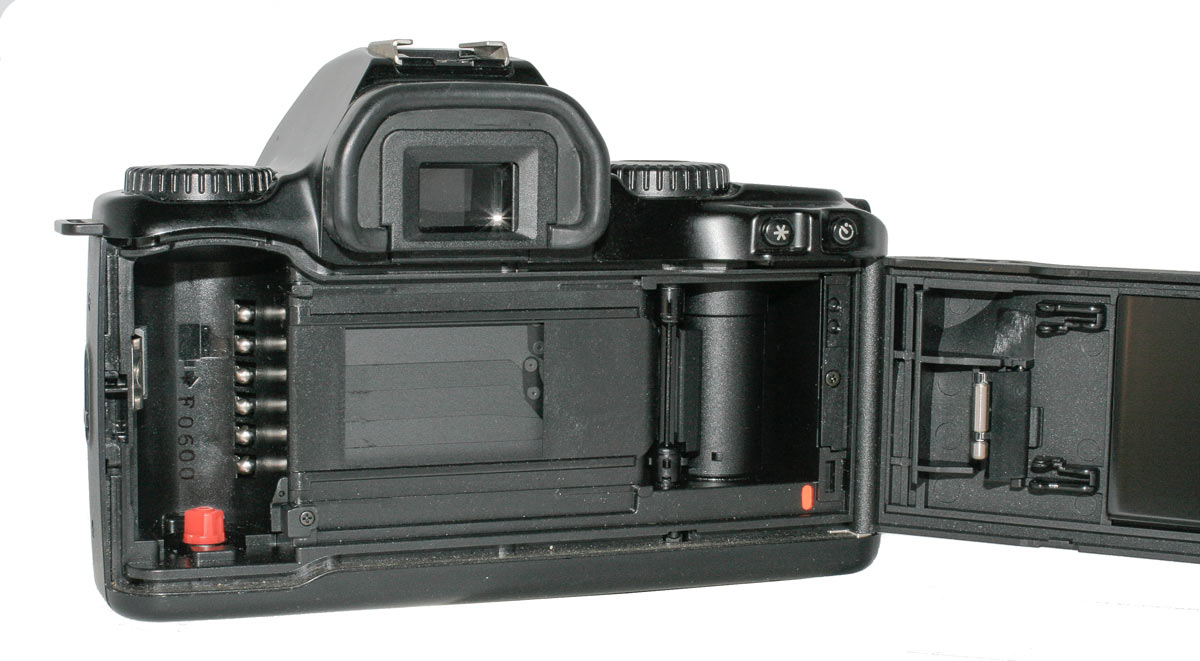
Inside the EF-M is almost identical to the EOS Rebel. You will see that the camera reads the DX Codes from the film can and sets ISO automatically. You can over ride this setting for film cannisters with incorrect or no DX Codes.
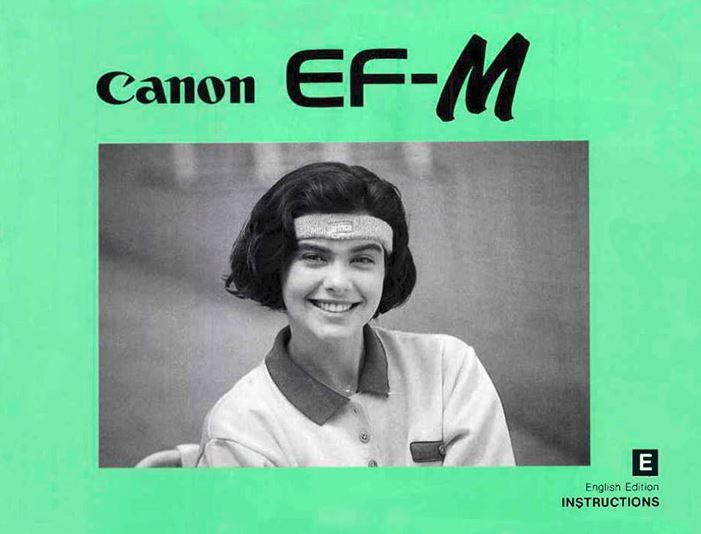

If you want to know the ins and outs of operating this camera you can read the User Instructions here.
This website is the work of R. Flynn Marr who is solely responsible for its contents which are subject to his claim of copyright. User Manuals, Brochures and Advertising Materials of Canon and other manufacturers available on this site are subject to the copyright claims and are the property of Canon and other manufacturers and they are offered here for personal use only. Use of this website is governed by the Terms of Service set out on the page by that name.

The True North Strong and Free