
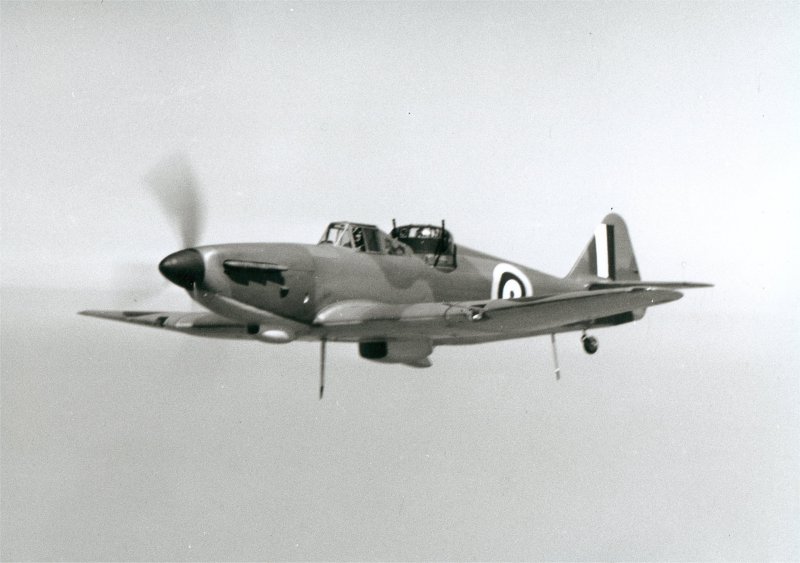
The Boulton Paul “Defiant”
1941
The Beginning of 409 Squadron
No. 409 Sqn. was formed as part of No. 12 Group of Fighter Command at RAF Digby on 17 June of 1941. 409 was the second of three Canadian night fighter squadrons created overseas that year. No. 406 was formed on the 10th of May and No. 410 on the last day of June.
The first commanding officer was S/L (later W/C) N. B. Petersen, a former flying
instructor at RCAF Station Camp Borden and one of the first Canadian pilots to ferry a Lockheed Hudson aircraft from Canada to the United Kingdom. On reporting to Digby to take up his new appointment he found an advance party at work but as yet the embryo squadron had neither aircraft nor crews so he left immediately for nearby RAF Station Wittering to get checked out on the Boulton Paul Defiant, the aircraft with which the squadron was to be equipped. The two Canadian officers who were to be his flight commanders, F/Os B. A. Handbury and F. S. Watson, were already taking instruction at a night fighter OTU (Operational Training Unit).

Above are two photographs of “Defiants” of RAF 264 Squadron from 1940/41. Below is a hand colored photograph of a “Defiant” from RAF Squadron 256 from the same period.


First Ops
The first aircraft arrived on 6 July and the next day 409 took to the air. Under Petersen’s guidance the squadron quickly took shape as a happy efficient unit. The CO himself had an active part in the
initial training program, teaching his pilots how to handle the Defiant and lecturing them in flying discipline, tactics and R/T procedure. On 25 July ’41 the squadron moved to the satellite aerodrome at Coleby Grange to complete their training. The first operational flight was made on 3 August by F/O Hanbury; on 20 August Group Headquarters declared the new unit to be fully operational.
At almost the same time the crews learned that they were going to turn in their Defiants for twin-engined Bristol Beaufighters. Although this meant a further period of intensive training it was indeed good news because at that time the Beau was the only aircraft with sufficiently high performance to take full advantage of AI radar and those squadrons already using them as night fighters were having great success. The first Beaufighters received, Model IIf’s, arrived in August of 1941. These were later replaced in June of 1942 with the Model VI which had the much more powerful Olympus radial engines.
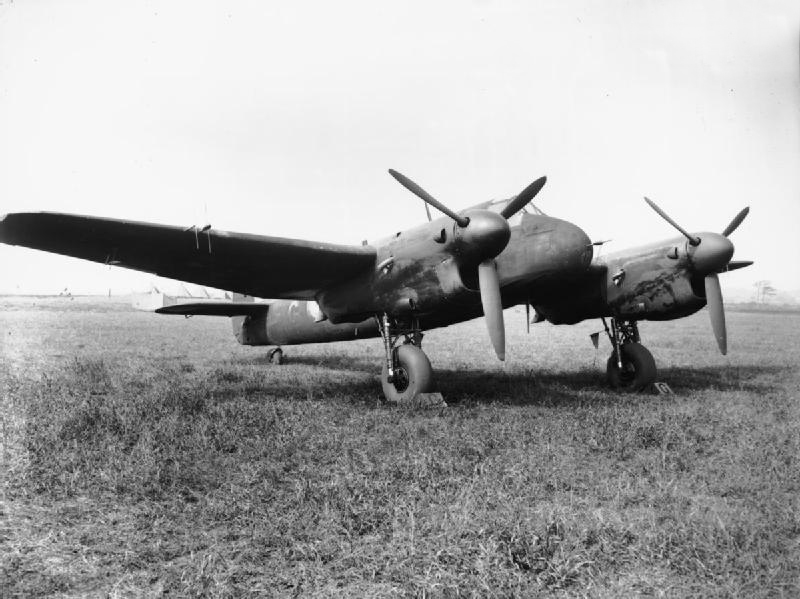
Beaufighter Mk. II of 255 Squadron RAF at RAF Hibaldstow, Lincolnshire in September 1941. This is the type first issued to 409 Squadron.
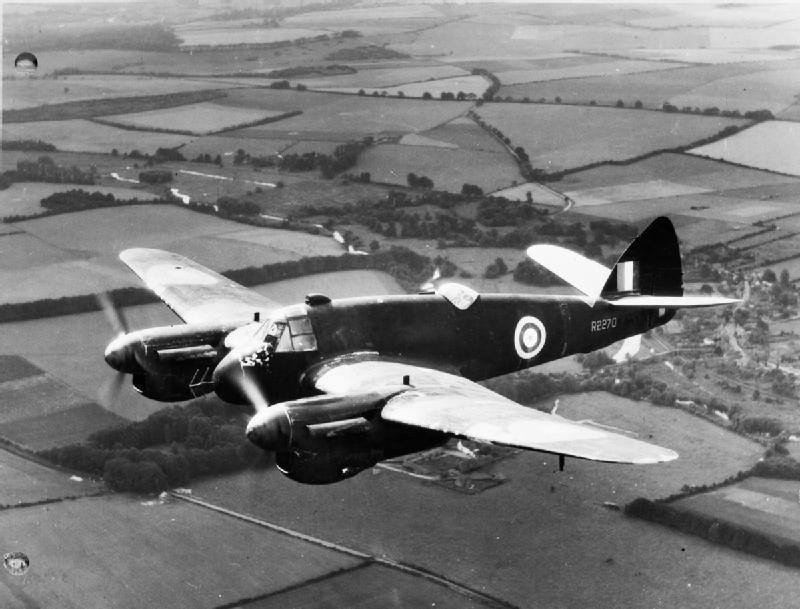
By late 1941 the Short Sterling Bomber construction was getting all Olympus engines being produced and so the Mk II’s got Merlin engins.
The period of conversion training was marred by 409’s first fatal accident on 2 September 1941 which took the life of W/C Petersen while checking out one of the replacement Beaufighters. The death of its CO was a hard blow to the fledgling squadron and it was a sad day for all when they laid him to rest in the little country church yard at Scopwick.
Fortunately an experienced, capable, and well liked officer was found to succeed W/C Petersen. This was S/L (later W/C) P. Y. Davoud, formerly CO of 410 Sqn., who in time was to become dean of RCAF night fighters. He had been a close friend of Petersen’s and was known personally to many 409 crews. His appointment brought a feeling of uplift to an otherwise depressed squadron.
The honor of making the Night-hawks’ first kill fell to the new CO. On 1 November ’41 Davoud and his navigator Sgt T. Carpenter (RAF) were flying on night patrol when the ground controller put them into the trail of an unidentified aircraft. Soon a blip appeared on the screen in Carpenter’s “little black box”, showing the bogey to be well to port and 500 feet below the Beaufighter. Davoud’s combat report describes how they closed in and shot down the German raider:
“…. I increased speed and turned to port and obtained a visual at 6000 feet, (silhouetted against the clouds in bright moonlight). I throttled back and lost height until slightly above and 400 yards to rear of enemy aircraft, who dived for cloud cover. I closed to approximately 200 yds., identified bandit as a Dornier 217 and fired a short burst observing hits on starboard main plane. The Dornier returned fire and having closed to about 100 yds, I fired two long bursts, seeing the second burst hit his starboard engine. Just before Dornier entered cloud, a big explosion blew his right engine and wing off. I pulled up to avoid a collision, and the Dornier fell burning, straight into the sea. I then returned to base, landing at 22.55 hours. “

The Dornier 217. This aircraft has German air to air radar antena on the nose suggesting its use as a nightfighter.
At the end of November the squadron was declared fully operational on Mk II Beaufighters but two conditions most annoying to night fighters, foul weather and lack of enemy activity, kept them from fighting any more engagements until the following spring. “No flying owing to weather,” were the comments that headed many an entry in the squadron diary during that fall and winter. Nevertheless, training was a continual commitment with interception practices being flown whenever the weather warranted; when it did not, the Link Trainer came in for a lot of use. One consolation that made up in small measure for the lack of aerial activity was the news that the hard working 409 crews were well ahead of the other squadrons of 12 Group in the number of link hours flown. In November a visit from His Majesty, King George VI, was the most memorable event in an otherwise dull fall and winter season.
The “Marr Family Pictures” is created by me, Flynn Marr, and is a private photo album of the Marr family and it’s offshoots.
The content is the property of R. Flynn Marr and subject to his claim of Copyright.
Copyright R. Flynn Marr © 2022